Fill the Stage

Daniel Dignan

Fill The Stage

High School

start / about

hero’s journey


terms / privacy

Subscribe via Email

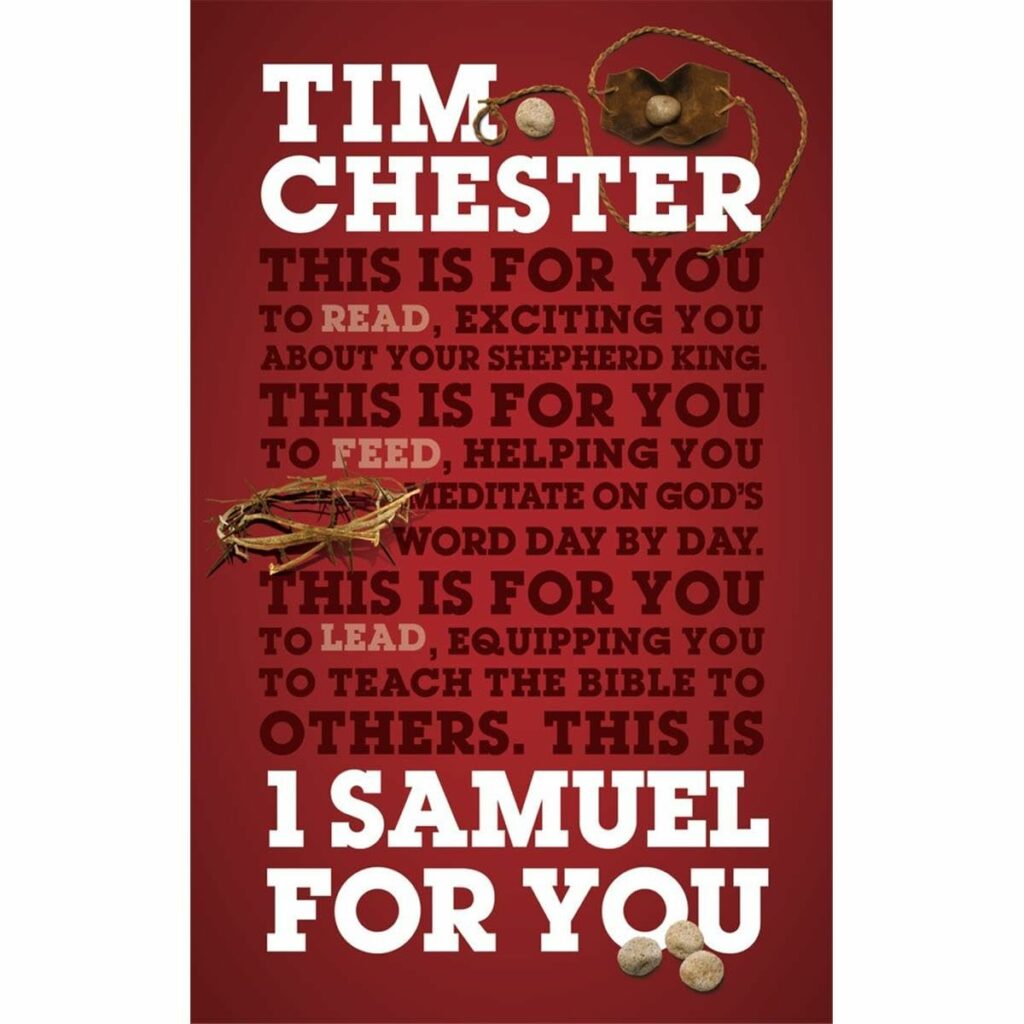
1 Samuel For You

August 17, 2025 by Daniel Dignan Leave a Comment

Samuel is an epic story about the early days of Israel, one thousand years before Christ. The nation comprising twelve tribes had experienced almost constant war and bondage. They had rejected their God, seeking a king like their neighbors, who would fight their enemies. Consequently, a man named Saul was anointed king. He united the tribes, won a great military victory, but eventually became corrupt.

In a war between Israel and the Philistines, a giant named Goliath taunted Israel and God, demanding one-on-one combat with one of Israel’s warriors to decide the outcome. Neither Saul nor any of Israel’s warriors volunteered. Yet, a shepherd boy named David told the king he would fight the giant. Refusing the king’s armor, he stepped onto the field of battle with a sling and a few small rocks. Perhaps you’ve heard what happened.

Throughout the story, Saul turned away from God and, over time, lost everything, including his family and self-respect. On the other hand, David endeavored to live a life devoted to God. He suffered severe persecution, but over time, David gained a kingdom, a family, and friends. Though imperfect, David functions as a pointer to a greater king, Jesus of Nazareth.

Samuel is not only a fascinating story but also an entry point for understanding the Bible as a whole. Tim Chester’s commentary is a fascinating guide, one I highly recommend.

Chester’s guide will help you:

  1. Understand the Bible better
  2. Learn how to make friends
  3. Learn how to handle difficulties
  4. Learn how to lead well
  5. Learn how to become a happier person

What did you find most helpful about 1 Samuel?

Filed Under: Bible Tagged With: David, Goliath, Samuel

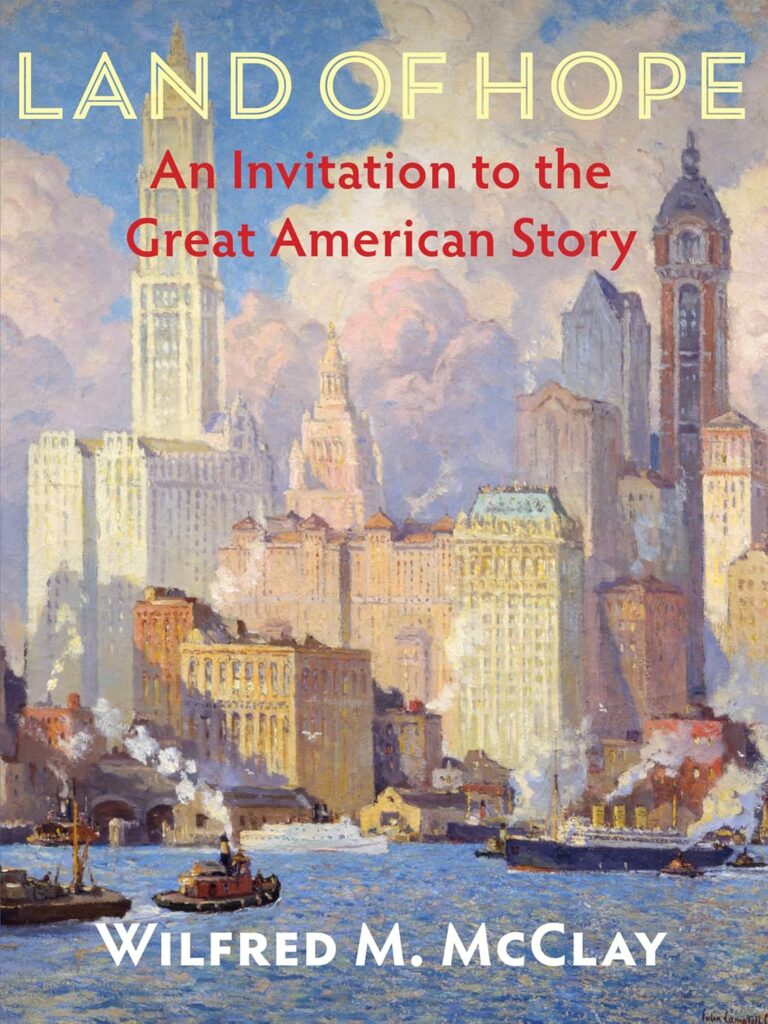
Land of Hope

August 3, 2025 by Daniel Dignan Leave a Comment

This is one of the most interesting books I’ve ever read. It’s the story of America from its discovery and founding to recent times. Wildred McClay overviews the significant events, people, and ideas that shaped America, aiming to show what made America a land of hope.

Events include the unsettlement of Europe, Christopher Columbus’s journeys to the New World, the Revolutionary War, Westward expansion, the Civil War, industrialization and modernization, the World Wars, the Cold War, and more. Highlighted leaders include George Washington, Thomas Jefferson, Abraham Lincoln, and Franklin Roosevelt.

The book offers a positive account of America’s rise and greatness without glossing over grave issues such as slavery and our national debt. The author reveals the unique ideas, convictions, and traditions that spurred American energy, generosity, purpose, commitment, and self-criticism. Moreover, McClay insightfully describes the role of America’s Christian heritage and its leaders in shaping American destiny. Along these lines, America’s literature is integrated into this retelling of American political and religious history, showing its impact and effect on the generations that followed.

This book is a tremendous educational experience. If you want a fascinating story about the land of hope that is America, this book is for you.

Filed Under: Leadership Tagged With: Land of Hope, Wilfred McClay

Beowulf

August 2, 2025 by Daniel Dignan Leave a Comment

Beowulf, a Scandinavian warrior, fights a monster named Grendel, then Grendel’s mother, and finally, years later, a fire-breathing dragon. Winning great honor, he eventually became a king, the bulwark of his people.

An ancient and renowned tale, over 1,000 years old, Beowulf was initially written in Anglo-Saxon, or Old English. This translation is regarded as one of the finest—poetic, epic, and gripping. About one hundred pages, it’s a quick read and hard to put down.

The unknown author offers a glimpse into the ancient heroic age of the Germanic peoples, who migrated to England and Denmark. They lived by the warrior code and sought glory through warfare.

Beowulf achieves great honor, and there are thrilling moments, and indeed, happy seasons. However, a perceptive observer noted that the book begins and ends with a funeral, revealing that the world is not enough.

Some of the great literary minds studied the tale. J.R.R. Tolkien, the author of The Lord of the Rings, translated Beowulf in his 30s and went on to teach it for decades, writing a commentary. (I have not read it.) In this translation, you can see the Old English on the left-facing pages; modern English is on the right.

Finally, after you read the epic, I recommend reading Seamus Heaney’s introduction.

What did you think about the story?

Filed Under: Adventures and Quests Tagged With: Beowulf, Seamus Heaney

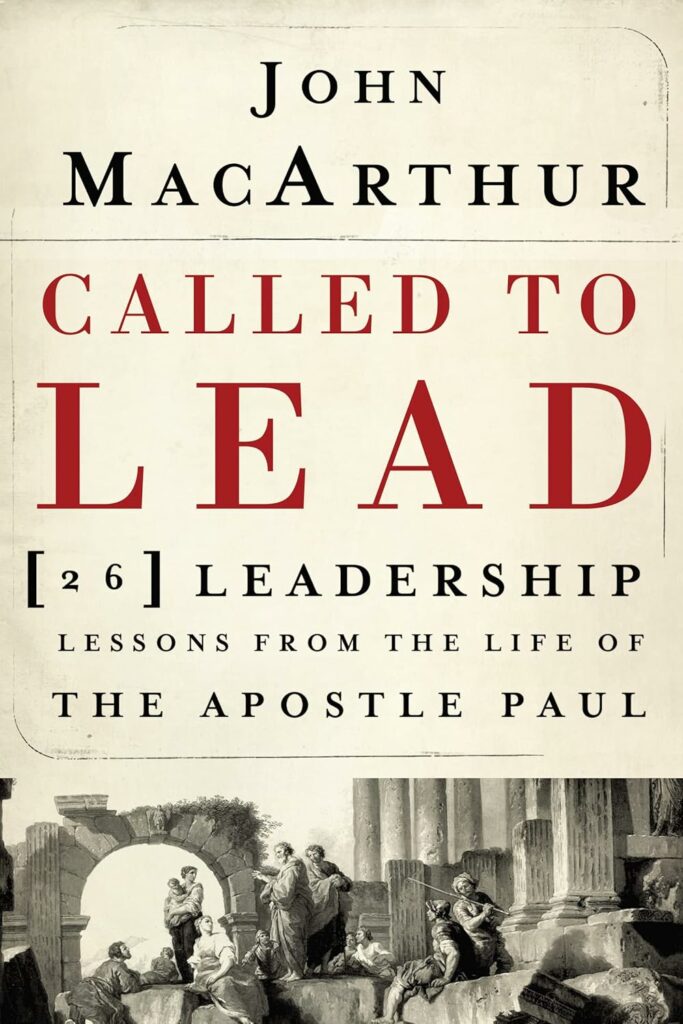
Called to Lead

July 28, 2025 by Daniel Dignan Leave a Comment

This is one of the best leadership books I’ve ever read. It’s about two leaders who changed the world: Nehemiah and Paul. Nehemiah lived about 400 years before Christ, when the Persian Empire ruled Asia. He rebuilt the ancient wall of Jerusalem and revived the nation about 150 years after the Babylonian Empire destroyed it. Paul lived during and after the time of Christ, writing much of the New Testament and spreading Christianity throughout much of the world. Both of these men were world-class leaders.

The author, John MacArthur, taught the Bible for over 50 years at Grace Community Church in California. In Called To Lead, he explains leadership principles implicit in Nehemiah and one of Paul’s letters, 2 Corinthians, such as trustworthiness and discipline. The book is an extraordinary guide to those who want to lead well.

What leadership principle helped you the most?

Filed Under: Leadership Tagged With: John MacArthur, Nehemiah, Saint Paul

Churchill

July 22, 2025 by Daniel Dignan Leave a Comment

To become a leader, you must develop your character. One way to build character is to read biographies of great leaders. This method has been used for thousands of years. Plutarch, a Roman politician and historian, wrote the Parallel Lives, in which he compared the characters of Greek and Roman leaders. Some of America’s founding fathers studied that book.

Here’s a recommendation: If you are interested in business, read a biography of a successful businessman, such as Walt Disney. If you are interested in ministry, read about a missionary, such as David Livingstone or Gladys Aylward. If you are interested in science, I recommend reading about Michael Faraday. His life is a true rags-to-riches story, and he changed the world. If you like politics, it’s hard to beat George Washington and Winston Churchill. Their leadership still influences untold numbers of people.

As you read the biography, identify what the leader did well. If you observe a great habit, write it down and try to put it into practice. Note mistakes and how they were handled. Also, note vices and moral failings. (An excellent biography gives you a sense of the whole person.)

The best biographers are entertaining and accurate, revealing what their subjects were like, what they were trying to do, and how things turned out.

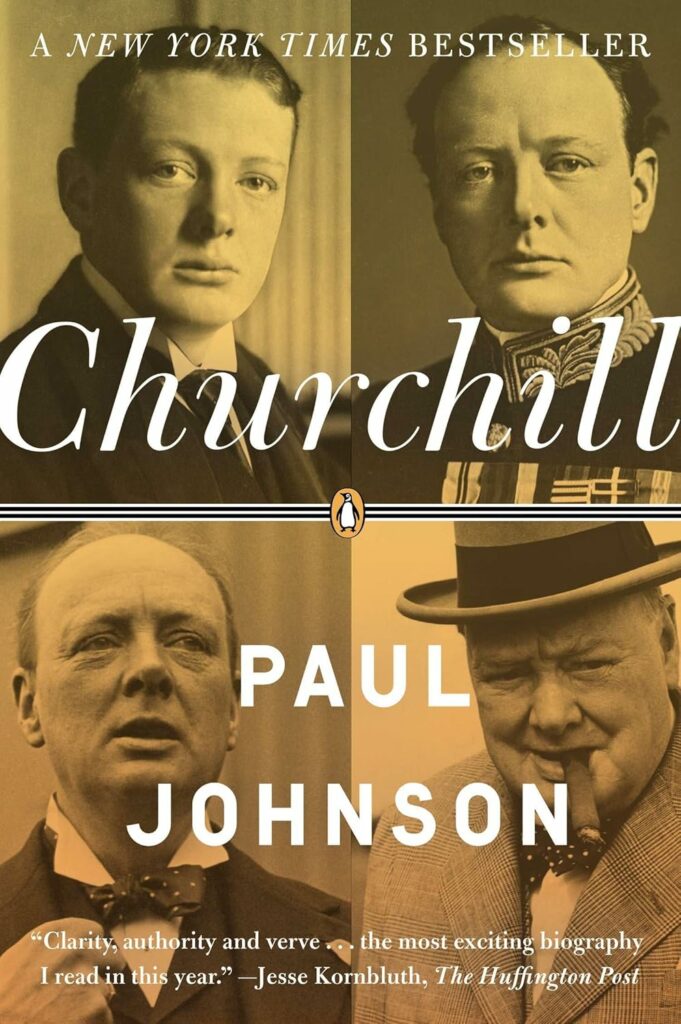
Churchill quite literally saved Western Civilization during World War II. His rise, fall, and rise is a fascinating story. Some consider him the greatest leader of the 20th century. I recommend reading Paul Johnson’s short biography: Churchill.

Once you start reading biographies, you might not find it easy to stop, but that’s a good thing.

Filed Under: Lives Tagged With: Biography, Paul Johnson, Winston Churchill

Knowing God

July 18, 2025 by Daniel Dignan Leave a Comment

I read this book when I was 19. It explains what some of the most ancient writings tell us about what God is like and how to know him. The writings are books contained within the Old and New Testaments.

I’ve read many books, but very few have made me a happier person or changed my life. This book did.

David, the one who killed Goliath with a sling, devoted much of his teenage years to studying the first five books of the Bible (Genesis, Exodus, Leviticus, Numbers, and Deuteronomy). He wrote this about God: “You make known to me the path of life; in your presence there is fullness of joy; at your right hand are pleasures forevermore.” (Psalm 16:11, English Standard Version)

What did you find most helpful about the book?

Filed Under: Christian Classics Tagged With: J I Packer, Knowing God

The Death of Ivan Ilych

July 5, 2025 by Daniel Dignan Leave a Comment

A successful middle-aged judge suffered a freak accident and faces a slow, painful death. As his condition worsens, he thinks about his life: his childhood, ambitions, regrets, and his personal conduct crowd into his mind. He wonders if he lived life as he should have.

Leo Tolstoy is one of the greatest fiction writers in all of history. He’s known for books like War and Peace, which is a very long novel. The Death of Ivan Ilych is a short, shocking read. It forces one stop and take stock of life, and it could change your life for the better.

The great Greek philosopher Socrates said, “The unexamined life is not worth living. Know thyself.” The idea is to make sure you are not living for things that ultimately do not matter, like fame and fortune. Instead, make sure you are living for what is true and good.

At the end of the story, something significant happened. What do you think occurred?

Filed Under: Christian Classics

The Small Woman

June 28, 2025 by Daniel Dignan Leave a Comment

In 1930, a young woman named Gladys Aylward, who felt the call to be a missionary, boarded a train in England for China. She carried her clothes and food in two suitcases. Due to the Sino-Soviet Conflict, her journey was blocked in Russia, forcing her to sleep out in the Siberian cold. After facing extreme danger, she was smuggled to Japan, where she made her way to China.

She learned Chinese and started an inn with an older missionary woman in a small (north-central) town called Yangcheng. She began feeding, housing, and telling Bible stories to mule caravaners. At first, the townspeople distrusted her, but over time, she gained respect.

Many unusual opportunities arose. The town’s Mandarin (the philosopher-leader) asked her to work for him as the local foot inspector. She traveled from village to village, unbinding the feet of girls and young women. Later, a prison riot erupted. The town leadership asked her to establish peace. Frightened but willing to go, she walked into the prison yard and witnessed horrors: a man with an axe was chasing and hacking fellow prisoners. The man approached her: she demanded that he hand her the axe.

Gladys experienced many difficulties and adventures. She traveled the region, establishing Christian communities. Her most significant test came during World War II when the Japanese invaded northern China, bombing and pillaging towns and villages. When Yangcheng was bombed, she led the cleanup and nursing efforts, lived in nearby mountains and caves, and cared for refugees. However, as danger increased, it became clear she had to leave, along with the village prisoners and nearly 100 orphans who considered Gladys their mother.

Her southwestern journey to the province of Sian achieved legendary status and is the book’s climax.

The author of Gladys Aylward’s biography, Alan Burgess, said she “is one of the most remarkable women of our generation.” Her heroic life and accomplishments began with a prayer that God would use her.

The book was published in 1957, and a movie debuted the following year. I highly recommend reading the book before watching it. Gladys Aylward thrived despite significant hardships; her willingness to live out her Christian calling in a region of great need led to an extraordinary life.

Filed Under: Adventures and Quests Tagged With: Gladys Aylward, The Inn of the Sixth Happiness

The Iliad

June 25, 2025 by Daniel Dignan Leave a Comment

A second reading of the Iliad in six months, this time in poetic form, deepened my appreciation of its majesty, significance, and point. The Iliad is Homer’s sweeping epic about the Trojan War, particularly the wrath of Achilles, the Greek hero and greatest warrior.

Many heroes play a role, the foremost of whom are Achilles and Hector, heroes of the Greek and Trojan armies. They are supported by the mighty Diomedes, Ajax, Odysseus, and Trojan Aeneas. Many fight for glory, each other, and, in Hector’s case, his city and family.

The war unfolds on a plain between the Greek ships and the city of Troy in modern-day western Turkey. The heroes are fearsome. Diomedes is so mighty that he is surrounded by a “crowd of champions” (126), and he leads from the front (185), putting his life on the line. Ajax is a towering warrior general; he fights with a mighty shield and spear. In one scene, he protects the ships and fights against seemingly impossible odds, knowing all might be lost. One is made to feel the difficulty and his overwhelming bravery and leadership:

“…a blast of weapons pounded Ajax, so he could not stand firm. He was forced back by Trojan fighters and the will of Zeus. His shining helmet, pummeled by the blows, clanged horribly around his battered skull. The blades kept hammering the ornate plates. His left arm wearied of the constant effort of holding up his flashing shield. But still the Trojans could not knock down his defense, hard though they pressed him with their constant strikes. His breath was labored and a flood of sweat drenched his whole body, and he could not rest. Danger was everywhere, pain piled on pain.” (382-383)

While thrilling, the fighting scenes are not the epic’s most critical parts. The scenes surrounding the war display the consequences of vice and virtue. The Greek king wronged Achilles, leading to the loss of many lives, yet Achilles’ pride and wrath are partly to blame. The entire war began with adultery and the theft of someone’s wife. One is made to see the importance of diplomacy, friendship, experience, skill, competence, communication, charisma, and exercising one’s talents amid need and in the fray.

As I reread the Iliad, I grew concerned that I was missing the point—the forest for the trees. Is Homer trying to tell us something applicable and essential for all time, vital for living a good life, and perhaps even an extraordinary one?

I was happy to hear about this First Things podcast. The speaker’s interpretation fits the story and its conclusion. He says the poem is a love epic: Homer wants us to ponder the necessity of forgiveness and loving one’s enemies. While the Iliad offers many lessons, that is indeed a vital point.

You can easily read 15 pages a day and finish the epic reasonably quickly. Pay attention to the dull parts, the difficulties endured, the self-sacrifices made, the love shown, and the epic’s end.

Share below what you find most interesting about the story.

Filed Under: Adventures and Quests Tagged With: Achilles, Emily Wilson, Homer, Odysseus, The Iliad

The Odyssey

June 24, 2025 by Daniel Dignan Leave a Comment

After the Trojan War, the great Greek hero Odysseus journeys home, longing to reunite with his wife, son, and kingdom. This will not be easy. Twelve temptations await him, requiring virtue and wit. He must lead men at sea, face deadly enemies, overcome a giant cyclops, resist deadly pleasure, and remain faithful to his family and home. 

The story is unforgettable. It has inspired leaders. Some of the greatest stories were influenced by it, such as Robert Louis Stevenson’s Kidnapped. Many readers haved gained a better understanding of how to live well. 

With guidance, huge benefits await the careful reader. I recommend Emily Wilson’s poetic translation: a gripping read.

Filed Under: Adventures and Quests Tagged With: Emily Wilson, Homer, The Odyssey

  • « Previous Page
  • 1
  • 2